

The choice of coating material for stents largely determines the performance limits of the device. TPU and silicone are the two main types of polymer coating materials, but their properties differ significantly—TPU is more akin to a ‘precision engineering material’, designed to achieve extreme thinness and mechanical strength. Silicone, on the other hand, is difficult to replace in certain applications due to its long history of use in implants and its chemical stability.
1. TPU Stent Coating: High Precision and Ultra-Thin Mechanical Properties
As a polymeric elastomer, thermoplastic polyurethane (TPU) stent coating offers unique performance advantages in the medical device sector. TPU belongs to the thermoplastic elastomer family; its molecular structure consists of hard and soft segments. This microscopic phase-separated structure endows it with high strength, high elasticity and exceptional wear resistance. In stent coating applications, TPU material can be processed into precisely controllable coatings using a variety of advanced techniques, meeting the stringent requirements of different clinical scenarios.
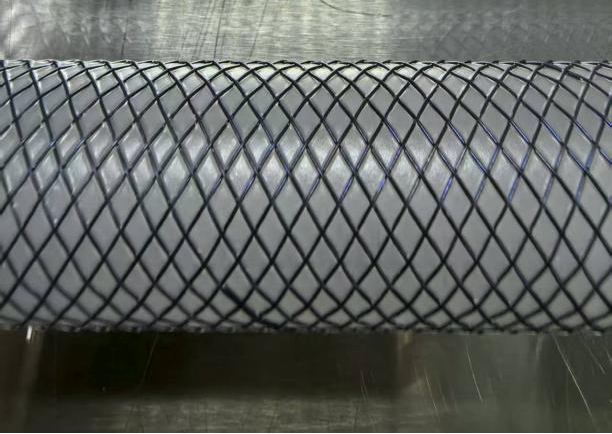
Outstanding mechanical properties and ultra-thin wall thickness are the most significant technical advantages of TPU coating. Using impregnation technology, TPU can be directly coated onto Nitinol stents, achieving an ultra-thin wall thickness of just 30 micrometres, with tolerances controlled within ±20%. This ultra-thin coating technology is particularly important in neurovascular and cardiovascular devices, as it significantly reduces the profile of the delivery system, enabling the stent to navigate through narrower and more tortuous anatomical structures to reach the lesion site. Furthermore, TPU coating offers exceptional durability and tear resistance, withstanding repeated compression and expansion without damage, thereby ensuring the long-term structural integrity of the implant.
Its excellent biocompatibility and functional versatility make TPU coating highly favoured in high-end medical devices. Through formulation adjustments, TPU materials can achieve good haemocompatibility and resistance to bodily fluid corrosion, and have been used in the medical device industry for many years. Their surfaces can be modified via plasma treatment or chemical coating to enhance lubricity, antimicrobial properties, or drug-loading capacity. Particularly in drug-eluting stent applications, TPU coatings can serve as drug carriers to achieve controlled release of antiproliferative drugs such as paclitaxel and oleanolic acid. Research indicates that through the structural design of the drug-loaded coating, stents can be engineered to exhibit microenvironment-responsive drug release. This accelerates drug release in weakly acidic or hydrogen peroxide microenvironments, thereby inhibiting excessive fibroblast proliferation without affecting normal epithelial cell proliferation, effectively reducing the incidence of restenosis following stent implantation.
2. Silicone Stent Coating: Biocompatibility and Long-Term Implant Stability
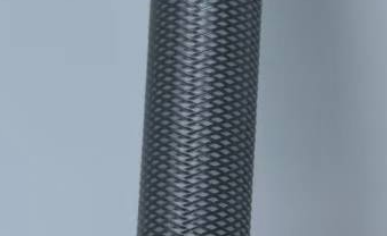
Silicone materials have been used in the medical device sector for over 60 years, and their biocompatibility and long-term implant safety have been thoroughly validated. As a stent coating material, silicone possesses a unique combination of properties that continue to make it the material of choice for specific applications. Medical-grade silicone undergoes rigorous biocompatibility testing and complies with USP Class VI and ISO 10993 standards, providing reliable safety assurance for long-term implantable devices.
Exceptional chemical inertness and biological stability are the core advantages of silicone coating. Silicone materials exhibit excellent tolerance to various body fluids, tissue fluids and blood components; they react minimally with substances within the body and maintain stable physical and chemical properties over the long term. This chemical inertness enables it to perform exceptionally well in applications requiring long-term implantation, such as airway stents and ureteral stents, effectively reducing the risk of tissue reactions and foreign body rejection. Furthermore, silicone materials possess excellent flexibility and elasticity, allowing them to adapt to the natural peristalsis and deformation of the human body’s cavities, thereby minimising mechanical irritation and damage to surrounding tissues.
3. Comparison of the Two Coating Materials and Analysis of Their Applications
Although TPU and silicone coating materials are both polymeric elastomers, they exhibit significant differences in terms of physical properties, processing characteristics and clinical applications. Understanding these differences is crucial for medical device design and material selection. The table below provides a detailed comparison of the performance characteristics of the two materials across various dimensions:
| Project | TPU lamination | TPU lamination | Comparative analysis |
| Minimum wall thickness | Up to 30 micrometres | Typically thicker (50 micrometres or more) | TPU allows for thinner coating, making it suitable for ultra-small delivery systems |
| Mechanical strength | High tensile strength, excellent abrasion resistance | Average; prioritises flexibility over strength | TPU is better suited to applications requiring durability |
| Biocompatibility | Good; can be adjusted according to formulation | Excellent; over 60 years of clinical use | Silicone has been more thoroughly validated for long-term implantation |
In the fields of vascular intervention and cardiovascular devices, TPU coating has become the material of choice for high-end devices. Particularly for neurovascular and coronary intervention devices, such as embolisation protection devices, thrombus retrievers and drug-eluting stents, ultra-thin TPU coating (30 micrometres) can significantly reduce the profile of the delivery system, enabling the device to reach the lesion site via smaller and more tortuous blood vessels. The TPU coating forms an integral structure with the Nitinol stent, offering excellent resistance to delamination and remaining undamaged even when compressed within microcatheters. Furthermore, TPU coating is widely used in products such as gastrointestinal stents, airway stents and aortic valves, where its high mechanical strength and relatively low thickness provide excellent radial support and patency.
By contrast, silicone-coated stents retain a traditional advantage in the field of non-vascular stents. In applications such as airway stents, ureteral stents and oesophageal stents, the chemical inertness and long-term stability of silicone materials ensure reliable clinical outcomes. These applications typically do not require extremely thin coating thicknesses, but place greater emphasis on the material’s biocompatibility and gentleness towards mucosal tissues. The flexibility of silicone materials allows them to better adapt to the natural morphology and peristalsis of the lumen, thereby reducing irritation and erosion of surrounding tissues.
4. Future Trends and Technological Innovation
With the continuous advancement of minimally invasive interventional techniques and the growing demand for precision medicine, stent coating technology is evolving towards thinner, smarter and more personalised solutions. Innovations in TPU and silicone coating materials and technologies will open up new possibilities for the next generation of medical devices. Currently, Qingdao Xingchuang Medical is conducting in-depth research and development into silicone and TPU stent coatings, and has commenced mass production of several stent models, which have been well received by customers. We welcome enquiries from all interested clients.